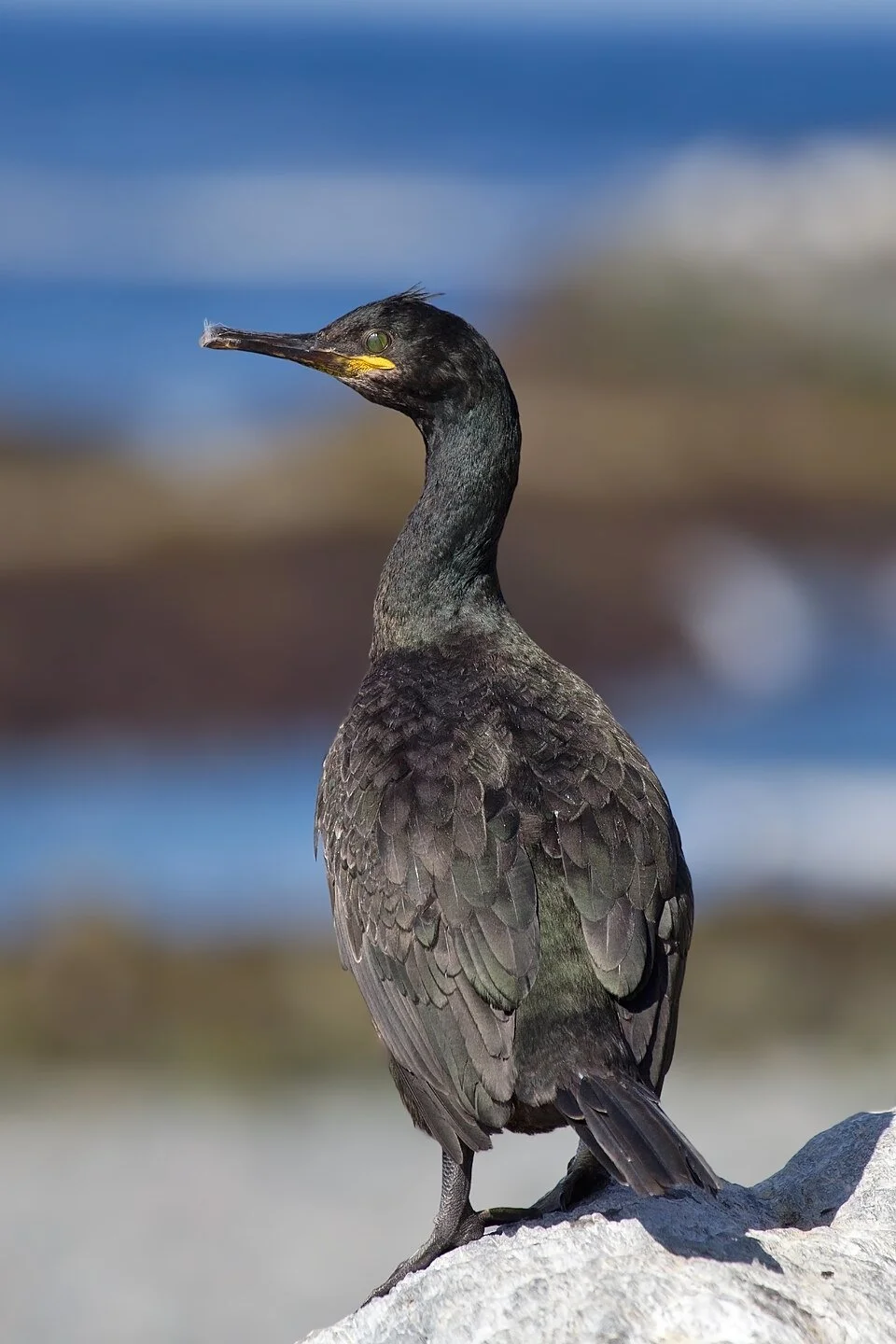
🐦 Dirty Birds: Meet the European Shag — The Seabird With a Name That Turns Heads
A wild hairstyle, impressive diving skills, and a name that's guaranteed to raise a few eyebrows.
Welcome back to Dirty Birds, the Perv Feeder™ blog series where we explore real birds with names that sound like someone was having a little too much fun when naming them.
Last time, we got acquainted with the Great Tit. This week, we're heading across the Atlantic to meet another feathered friend with an unforgettable name.
Ladies and gentlemen, allow us to introduce…
🌊 The European Shag!
Yes, you read that correctly.
The European Shag is a real bird.
And before your imagination runs wild, we're talking about an actual seabird.
Although, admittedly, telling someone you spent your weekend watching European Shags might earn you a few confused looks.
But don't let the name distract you. This bird is an incredible swimmer, a talented underwater hunter, and quite possibly the owner of the most stylish hairstyle in the seabird community.
Let's get to know this magnificent creature.
🐦 What Exactly Is a European Shag?
The European Shag (Gulosus aristotelis) is a seabird belonging to the cormorant family, Phalacrocoracidae.
It's closely related to the Great Cormorant, but it's generally smaller, slimmer, and has a more delicate bill.
Think of it as the cormorant's slightly more fashionable cousin.
European Shags typically measure:
Length: 65–80 cm (approximately 26–31 inches)
Wingspan: 90–105 cm (approximately 35–41 inches)
Weight: 1.75–2.25 kg (approximately 3.9–5 pounds)
Diet: Primarily fish, with some crustaceans and mollusks
Unlike the little songbirds visiting your backyard feeder, the European Shag is built for life along the coast.
These birds spend their days swimming, diving, fishing, and hanging out on rocky shorelines.
Sounds like a pretty good lifestyle, honestly.
Fun fact: The European Shag is also known simply as the Shag in Britain and Ireland.
No need to make things complicated when you've already got such a memorable name.
💇 A Shag With a Seriously Impressive Hairdo
One of the European Shag's most distinctive features is its hairstyle.
During breeding season, adults develop a small, forward-curving crest of feathers on their heads.
Imagine a bird waking up, looking in the mirror, and deciding:
"You know what? Today feels like a good day for a mohawk."
And just like that, the European Shag becomes one of the most stylish birds on the coastline.
Its feathers are another standout feature.
Although European Shags often appear black from a distance, adult birds can display a beautiful, glossy green sheen.
Add their striking pale green eyes and slender necks, and you've got one surprisingly elegant seabird.
Who knew a Shag could look so sophisticated?
Why Is It Called a Shag?
The name is associated with the bird's shaggy crest of head feathers.
So, despite what you might have been thinking, the name has a perfectly innocent explanation.
We know. Slightly disappointing.
But at least now you have an interesting fact to share the next time someone mentions a European Shag.
🌍 Where Can You Find a European Shag?
If you're hoping to spot one of these birds in the wild, you'll need to head toward the ocean.
European Shags live along coastlines throughout parts of Europe, North Africa, and nearby regions.
They can be found around:
The British Isles
Norway and Iceland
Coastal France, Spain, and Portugal
The Mediterranean Sea
Parts of the Black Sea
Sections of the North African coastline
They particularly enjoy rocky coastal environments, offshore islands, cliffs, and sheltered nesting areas.
Unlike some seabirds that travel enormous distances across the ocean, many European Shags remain relatively close to their breeding areas.
Apparently, once a Shag finds a good spot, it doesn't feel the need to wander too far.
Bird-watching tip: Look for European Shags perched on coastal rocks, swimming close to shore, or disappearing beneath the water in search of fish.
Just remember to bring binoculars.
Nobody wants to explain why they were creeping around the coastline trying to get a closer look at a Shag.
🐟 European Shags Are Incredible Underwater Hunters
Here's where things get genuinely impressive.
European Shags are excellent divers.
Rather than simply grabbing food from the water's surface, they dive beneath the waves and actively chase fish underwater.
Their streamlined bodies, strong legs, and webbed feet help them move efficiently through the water.
Their diet includes small fish such as sandeels and other locally available species.
Imagine being a little fish, minding your own business, when suddenly a Shag comes speeding toward you.
Not exactly the relaxing afternoon you had planned.
Unlike many backyard birds that hop around collecting seeds, European Shags have to work for their meals.
They dive, pursue their prey, and return to the surface after a successful hunt.
It's basically underwater takeout.
Except the food is significantly fresher.
Do European Shags Eat Birdseed?
Unfortunately, no.
As much as we'd love to see a European Shag stopping by a Perv Feeder™, these birds aren't interested in sunflower seeds or backyard birdseed mixes.
They're fish eaters.
And considering their size, we'd probably need to design a considerably larger feeder anyway.
Perv Feeder™: European Shag Edition?
Now there's an interesting product development meeting.
🪺 How Do European Shags Build Their Nests?
When breeding season arrives, European Shags head to rocky coastal nesting sites.
They often nest in colonies, choosing protected locations such as cliff ledges, caves, and rocky crevices.
Their nests are typically constructed from materials such as seaweed and vegetation.
A female generally lays between one and four eggs.
Both parents take part in caring for their young.
And while European Shags may not be winning any awards for the most luxurious real estate, their nesting locations often come with spectacular ocean views.
Cliffside property.
Fresh seafood.
No noisy neighbors — unless you count the entire seabird colony.
Honestly, they might be onto something.
👀 European Shag vs. Great Cormorant: What's the Difference?
At first glance, European Shags and Great Cormorants can look remarkably similar.
Both are dark-colored seabirds with long necks and impressive fishing abilities.
However, there are some useful differences.
European Shag:
Generally smaller and slimmer
Narrower, more delicate bill
Glossy green plumage in breeding season
Distinctive forehead and breeding crest
Strong preference for marine coastal habitats
Great Cormorant:
Generally larger and heavier
More robust bill
Often displays white facial or thigh patches during breeding season
Found in both coastal and inland freshwater habitats
If you spot a sleek, dark seabird with a fancy little crest sitting on a coastal rock, there's a good chance you've found yourself a European Shag.
Congratulations!
You can officially tell your friends you've been Shag spotting.
Just be prepared to explain yourself.
😲 Five Fun Facts About the European Shag
1. The European Shag Has Naturally Green-Tinted Feathers
Despite appearing black from a distance, breeding adults can have beautiful metallic-green plumage.
It's nature's version of a premium paint job.
2. Shags Are Built for Diving
These birds use their webbed feet to propel themselves underwater while pursuing fish.
They're much more graceful beneath the waves than their slightly awkward appearance on land might suggest.
3. They Have a Distinctive Breeding-Season Crest
That little tuft of feathers isn't always equally noticeable.
It's particularly prominent during breeding season.
Apparently, even seabirds like to dress up when they're trying to impress someone.
4. They Often Stay Close to Home
Many European Shags remain near their breeding areas rather than making long-distance migrations.
Why travel halfway around the world when you've already found a perfectly good coastline?
5. Their Populations Face Conservation Challenges
Although the European Shag is globally classified as a species of Least Concern, its overall population trend is considered decreasing.
Some regional populations face significant conservation challenges, making protection of coastal habitats and food sources important.
Even a bird with a funny name deserves serious conservation attention.
🌊 Are European Shags Endangered?
Globally, the European Shag is currently classified as Least Concern by the International Union for Conservation of Nature (IUCN).
However, that doesn't mean the species is free from threats.
European Shags can be affected by changes in fish availability, extreme weather, disturbance at nesting sites, and accidental capture in fishing equipment.
In some areas, their populations have experienced substantial declines.
Protecting healthy marine ecosystems is essential for ensuring these fascinating seabirds continue thriving.
Because the world would be a little less interesting without European Shags.
And we mean that sincerely.
Mostly.
🐦 Why We Love the European Shag
At Perv Feeder™, we believe bird watching should be fun.
Sure, identifying species, learning about habitats, and understanding bird behavior are all important.
But sometimes, the best part of bird watching is discovering that nature has an absolutely ridiculous sense of humor.
The European Shag is a perfect example.
It's a genuinely fascinating seabird with impressive underwater hunting abilities, beautiful plumage, and an unforgettable name.
And if learning about a bird called the European Shag makes someone laugh and become a little more interested in wildlife?
We consider that a win.
After all, a little laughter can make learning about nature a whole lot more entertaining.
🍆🐦 Keep Watching Those Dirty Birds!
The European Shag is just one of many real birds with names that sound almost too good to be true.
From Great Tits to Blue-footed Boobies, the bird world is absolutely full of surprises.
And we're only getting started.
Stay tuned for more installments of Dirty Birds, where we'll continue introducing you to some of nature's most interesting, unusual, and hilariously named feathered friends.
In the meantime, if you're looking to make your own backyard bird-watching adventures a little more entertaining, check out the novelty bird feeders from Perv Feeder™.
They're designed to attract real backyard birds while giving humans something to laugh about.
Because life's too short for boring bird feeders.
Perv Feeder™ — Making Bird Watching a Little More Interesting.
Frequently Asked Questions About the European Shag
Is the European Shag a real bird?
Yes! The European Shag (Gulosus aristotelis) is a real seabird belonging to the cormorant family. It lives primarily along rocky coastlines in Europe and surrounding regions.
Why is it called a European Shag?
The name is associated with the bird's shaggy crest of feathers, which becomes especially noticeable during breeding season.
What does a European Shag eat?
European Shags primarily eat fish, including sandeels and other small marine fish. They catch their food by diving underwater.
Where do European Shags live?
They inhabit coastal regions of Europe, the Mediterranean, parts of the Black Sea, and North Africa.
Can European Shags visit backyard bird feeders?
European Shags are marine birds that eat fish, so they aren't typical backyard bird-feeder visitors.
Are European Shags endangered?
They are globally classified as Least Concern, although some populations are declining and face conservation threats.
